Recovered capacity is not the same as realized value


We're careful about the difference. Organizational friction drains a meaningful share of productive capacity, as much as ~20–40%. We can clean a great deal of that up. But not all of it converts into hard value a CFO can see on the P&L — and any firm that promises otherwise is selling you a number, not a result. So we separate the capacity we can recover from the value that capacity can actually become, and we're honest about the gap.
How We Think About Value
Value recovered falls into four pools
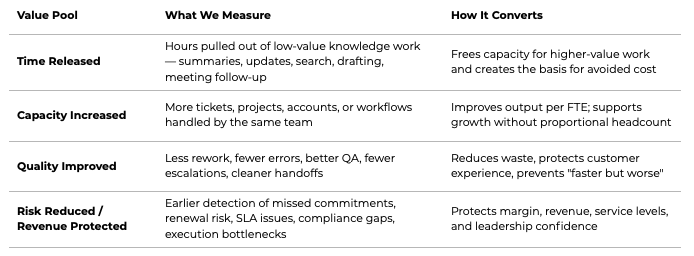
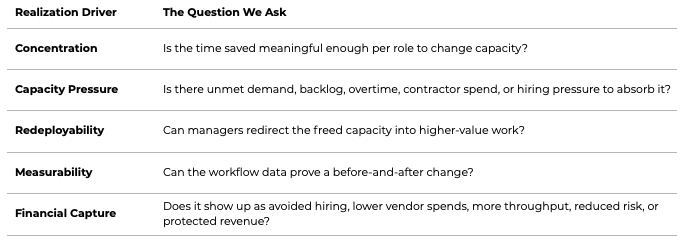
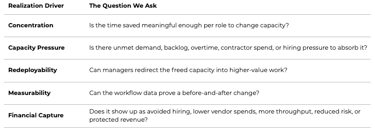
So we apply a realization factor that helps us see not just the theoretical potential for improvements, but what economic value will be recovered on the income statement.
... not all value is economically realized


This is why two organizations can run the same redesign and see very different returns — and why we'd rather tell you that up front than discover it together later. AI is one lever inside this model. So are decision rights, operating rhythm, and trust. The tool changes; the discipline of converting improvement into value does not.
The strategy-execution gap is not just a planning problem. It's a human one.
Subscribe to Our Newsletter